.png) April 20, 2026
April 20, 2026
.png) Lina Encinias
Lina Encinias
.png)
Sulfur hexafluoride (SF₆) plays an essential role in modern electrical infrastructure. Utilities, OEMs, and industrial facilities rely on this insulating gas to ensure the safe and reliable operation of high-voltage equipment such as switchgear and circuit breakers. Its exceptional dielectric properties make it essential for power transmission and distribution systems around the world.
However, once SF₆ has been used during maintenance, removed from aging equipment, or contaminated during operation, it cannot simply remain in storage indefinitely. Proper SF₆ gas disposal is essential for minimizing emissions, maintaining regulatory compliance, and ensuring that recoverable gas can be reclaimed and returned to the industry.
Across the power sector, organizations are increasingly recognizing the importance of returning unused or contaminated SF₆ for responsible handling. Recovering, recycling, and disposing of insulating gas properly protects the environment while supporting a more sustainable and reliable gas lifecycle.
Why Returning SF₆ Gas for Disposal Matters
SF₆ is widely used because of its insulating performance and reliability. At the same time, it is also one of the most potent greenhouse gases used in industrial applications. When improperly stored or released, it can significantly contribute to long-term environmental impacts. For that reason, responsible handling of SF₆ throughout its lifecycle, from recovery and storage to recycling or destruction, is essential.
According to the guidelines published by CIGRE, proper end-of-life treatment of SF₆-filled transmission and distribution equipment includes controlled gas recovery, decontamination, recycling where possible, and certified disposal to prevent emissions.
When unused or contaminated gas sits idle in cylinders or storage areas, several challenges emerge. First, supply constraints can develop across the industry. Utilities and equipment manufacturers increasingly rely on reclaimed gas to meet operational needs. When used gas is not returned for reclamation or recycling, the available supply of reusable gas decreases.
Compliance concerns also grow as regulations surrounding SF₆ emissions become stricter. From 2011 to 2020, the allowed maximum SF₆ emissions rate in California decreased by one percent each year. Since 2020, the maximum SF₆ emissions rate for owners of SF₆-insulated switchgear has been capped at just one percent annually. Regulations like these are driving organizations to adopt more responsible SF₆ gas handling and lifecycle management practices.
Sustainability initiatives are another major factor. Many utilities and industrial companies have committed to reducing greenhouse gas emissions. Proper gas recovery, recycling, and disposal support those commitments by preventing unnecessary emissions and keeping reusable gas within the supply chain.
What Is SF₆ Gas Disposal?
SF₆ gas disposal refers to the controlled process of removing used, contaminated, or out-of-spec SF₆ gas from service and sending it for proper treatment. The goal is to prevent emissions while ensuring that any gas that can still be reclaimed is recovered and returned to the industry.
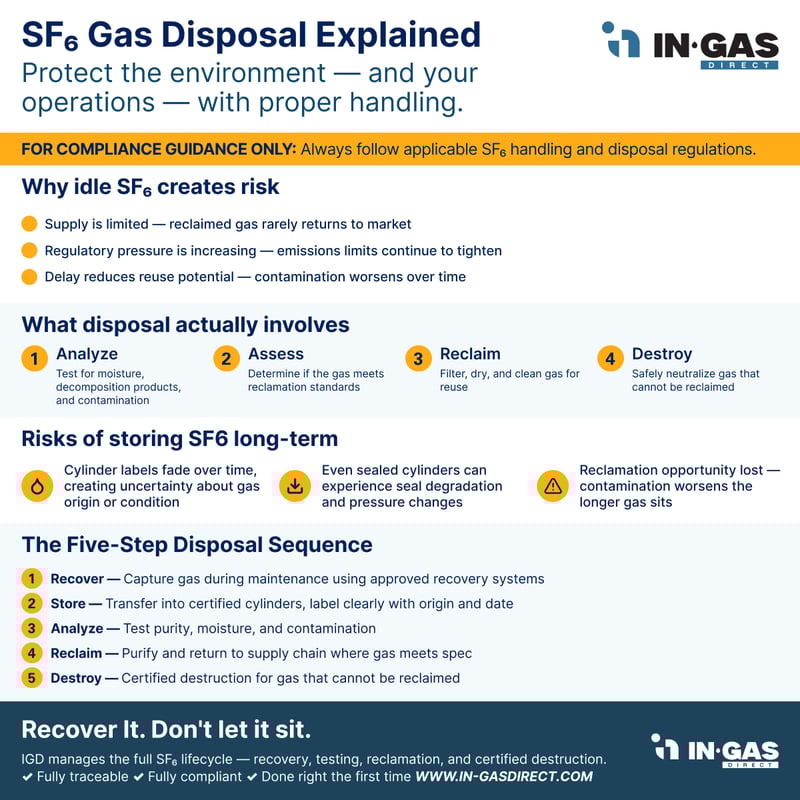
Depending on the gas condition, disposal may involve several stages. These typically include gas recovery from electrical equipment, analysis to determine purity and contamination levels, recycling or purification for reuse, and certified destruction when the gas cannot be reclaimed.
Organizations handling gas cylinders, storage tanks, and recovery carts should treat unused SF₆ as a valuable industrial material rather than as waste. When handled properly, a significant portion of the recovered gas can be reclaimed and reused rather than destroyed.
Companies that need reliable disposal services often turn to specialized providers such as SF₆ recycling and disposal experts who can evaluate gas quality and determine the appropriate pathway for recycling or destruction.
Proper Disposal Starts With Proper Recovery
Responsible disposal begins with effective gas recovery. During equipment maintenance, repairs, or decommissioning, recovery systems capture SF₆ instead of allowing it to escape into the atmosphere.
Recovery equipment is designed to safely remove gas from insulated electrical equipment and transfer it into approved storage cylinders. These systems compress the gas, prevent emissions during maintenance operations, and preserve the gas for further analysis.
Modern recovery equipment is especially important during switchgear servicing and the removal of end-of-life equipment. Without proper recovery procedures, gas emissions can occur during maintenance activities.
However, recovery alone does not solve the problem if the gas is never returned for evaluation or recycling. Many organizations store recovered gas in cylinders indefinitely, unsure of how to handle it. Over time, these stockpiles grow, creating operational, compliance, and environmental challenges.
Services such as SF₆ & Insulating Gas Recovery support utilities and contractors by ensuring that gas is safely captured and prepared for the next stage of recycling or disposal.
The SF₆ Disposal and Reclamation Process
Once recovered gas is sent to a qualified disposal provider, it goes through a structured evaluation process. This process determines whether the gas can be reclaimed or whether it must be destroyed.
The first step is gas analysis. Specialists evaluate the gas to identify contaminants such as moisture, decomposition products, or other impurities that may have developed during equipment operation.
After testing, the gas is assessed for reclamation potential. If purification can restore the gas to industry specifications, it enters the reclamation process. During reclamation, the gas is filtered, dried, and cleaned to remove contaminants. Reclaimed gas can then be returned to the supply chain and used again in electrical equipment.
If the gas cannot be purified to acceptable standards, it must be destroyed by certified means. This process safely neutralizes the gas to prevent emissions and environmental damage.
These steps ensure that every cylinder of returned gas is managed responsibly and that reusable gas is recovered whenever possible.
Avoiding the Risks of Long-Term SF₆ Storage
Many organizations store recovered SF₆ for extended periods while determining what to do with it. Unfortunately, long-term storage can create several operational and compliance challenges.
Over time, cylinder labels may fade or become unclear, making it difficult to determine gas origin or condition. This creates uncertainty about whether the gas is reusable or contaminated.
Storage also increases the risk of leaks. Even properly sealed cylinders can experience minor pressure changes or seal degradation over time. Any accidental release contributes directly to greenhouse gas emissions.
Compliance exposure is another important concern. Regulatory agencies increasingly expect organizations to demonstrate responsible SF₆ lifecycle management. Maintaining large inventories of unused gas without a clear plan for disposal or reclamation can raise concerns during audits.
Finally, delaying disposal may reduce the availability of reclamation opportunities. Gas that could have been purified earlier may become increasingly contaminated during prolonged storage, reducing the likelihood of reuse.
Returning unused gas promptly helps organizations avoid these risks while ensuring responsible environmental management.
Closing the Loop on SF₆ in the Industry
The electrical power industry depends on responsible lifecycle management of insulating gases. When companies recover, recycle, and dispose of SF₆ properly, the entire sector benefits.
One of the most important outcomes is reduced environmental impact. Following established best practices can significantly reduce SF₆ emissions, helping utilities and industrial operators limit the release of this powerful greenhouse gas.
Responsible disposal also helps maintain a reliable supply of reclaimed gas. As global demand for insulating gases continues, reclaimed SF₆ becomes an increasingly important resource for utilities and equipment manufacturers.
Organizations that actively manage insulating gases also demonstrate leadership in sustainability and compliance. Environmental responsibility is becoming an essential part of utility operations, and proper gas management plays an important role in meeting those goals.
In many ways, the industry’s ability to manage SF₆ effectively depends on shared participation. Utilities, contractors, service providers, and equipment manufacturers all play a role in ensuring that insulating gases are recovered, returned, and processed correctly.
A Simple Step With a Big Impact
Returning unused or contaminated SF₆ may seem like a small operational step, but it has significant implications for environmental protection and industry sustainability.
When organizations send gas for proper disposal or reclamation, they reduce emissions, support circular gas management practices, and maintain compliance with evolving regulations.
More importantly, responsible disposal prevents insulating gas from becoming a long-term liability. Instead of sitting unused in storage cylinders, recovered gas can either be reclaimed for reuse or safely destroyed.
These practices strengthen both operational reliability and environmental responsibility across the industry.
Partner With IGD for Safe and Compliant SF₆ Gas Disposal
If your organization has unused, contaminated, or out-of-spec SF₆ stored in cylinders, taking action now can help prevent compliance risks and support responsible gas management. At In-Gas Direct (IGD), we help utilities, contractors, and industrial operators handle insulating gases safely through professional recovery, evaluation, recycling, and disposal services.
Our team provides the expertise, documentation, and traceability required to ensure that your gas is processed in accordance with environmental and industry standards. Whether the gas can be reclaimed for reuse or requires certified destruction, IGD ensures it is handled safely and responsibly.
Take advantage of IGD’s spring SF₆ gas disposal program and safely manage your unused or contaminated gas at a discounted rate.
Learn more about our SF₆ recycling and disposal services and how we help organizations reduce emissions, stay compliant, and handle insulating gases with complete confidence.

Lina Encinias
Lina Encinias holds a B.S. in Environmental Science with a minor in Mass Communications from the University of South Florida. Since joining DILO in 2017, she has combined her technical knowledge with her communication skills to support utilities and industries in safe, compliant, and sustainable gas management. Passionate about environmental stewardship, Lina is dedicated to advancing best practices that protect both people and the planet.